Turning hours
into minutes.
Trading card sellers on eBay and similar platforms faced a daily grind: writing accurate, compelling listings for dozens — sometimes hundreds — of cards. A single seller could lose 2–3 hours every day just on copy, time better spent sourcing, shipping, and scaling their business.
Speedy Card Lister AI is an intelligent listing tool that understands card grading, set names, condition language, and platform best practices — generating professional-grade listings in seconds.
A manual process
killing growth.
Card sellers are entrepreneurs first, writers second. Yet the eBay algorithm rewards detailed, keyword-rich descriptions — meaning low-effort listings get buried. The ones who did invest in quality copy had a real edge, but not everyone had the time or skill to write well at volume.
Existing generic AI writing tools didn't understand the card collecting domain — they'd confuse card grades, misuse hobby terminology, and produce copy that felt obviously AI-generated to experienced buyers. Sellers needed something that spoke their language.
"Sellers don't just want speed — they want listings that sound like they were written by an expert seller who actually knows the hobby."
Getting inside
the seller's world.
I ran discovery sessions with 8 active card sellers across different volume tiers — casual weekend flippers to full-time dealers moving 200+ cards a week. The goal: map the current workflow end-to-end and find where the real friction lived.
8 in-depth sessions with sellers across eBay, TCGPlayer, and StockX. Mapped their full listing workflow and identified the biggest time sinks at each stage.
Reviewed 6 existing AI writing tools and how sellers were using them. Found that all failed at domain specificity — none understood card grading scales, set names, or condition language.
Built a step-by-step map of the ideal listing flow, identifying exactly where AI could intervene without removing the seller's voice and judgment.
Building the
right interface.
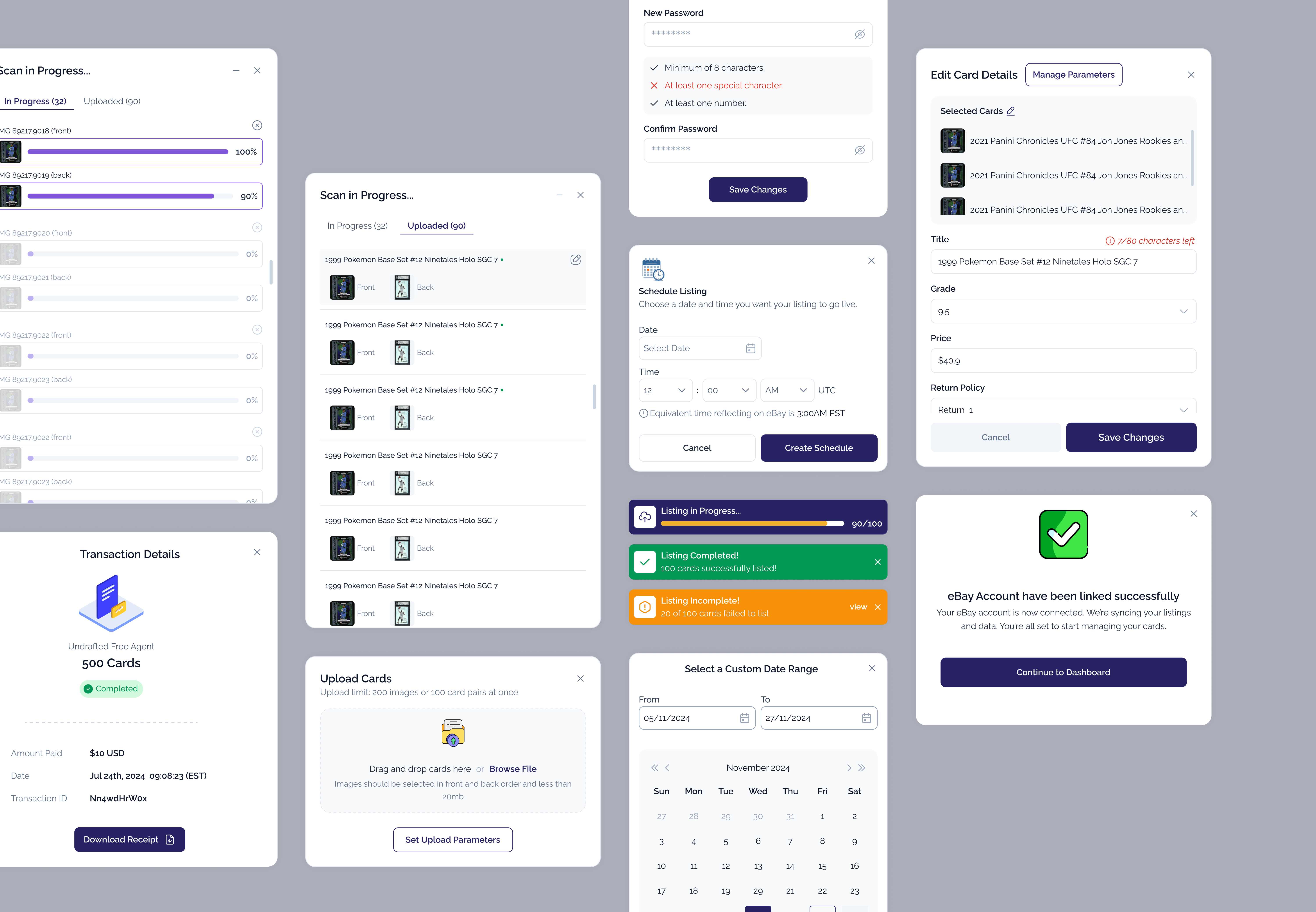
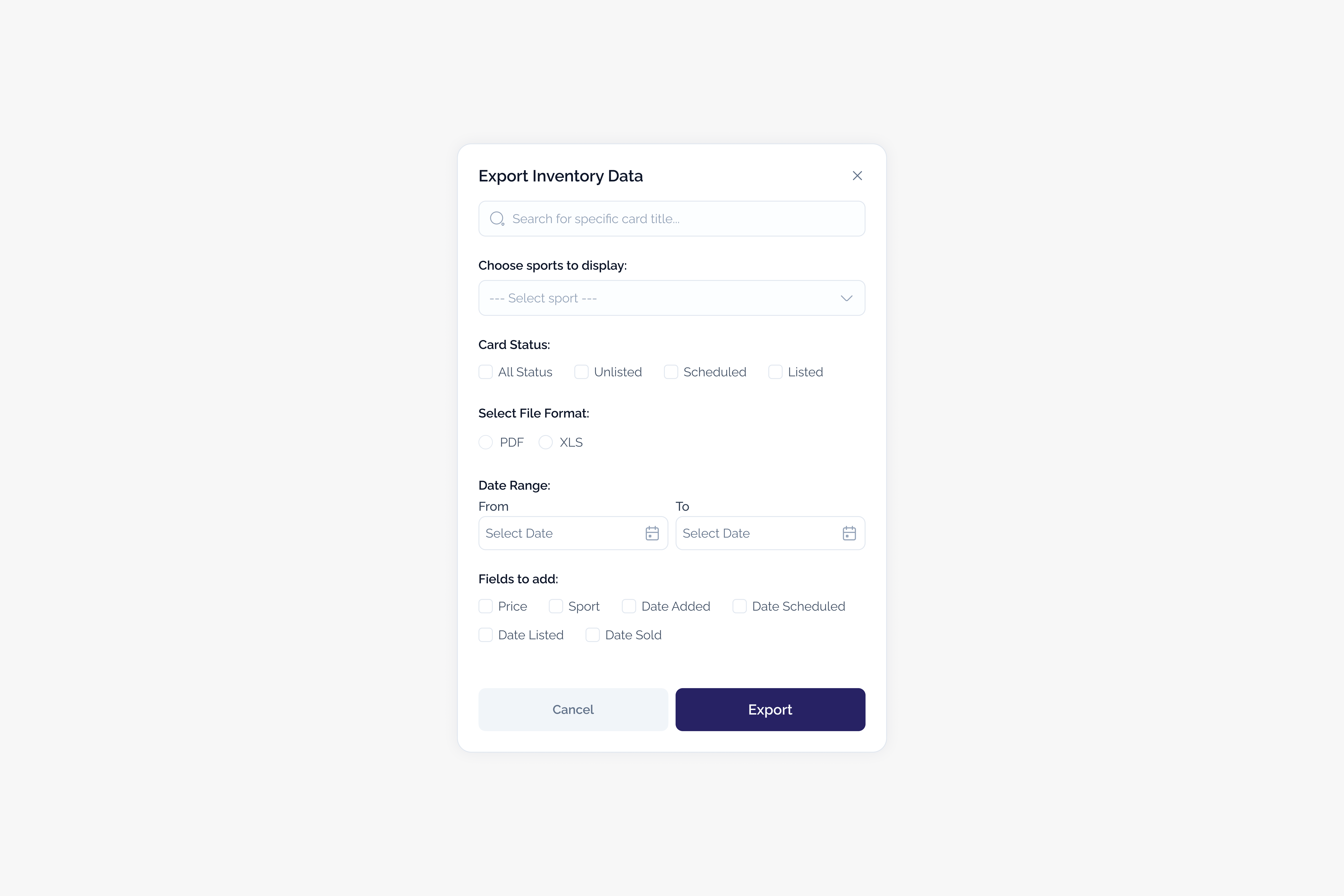
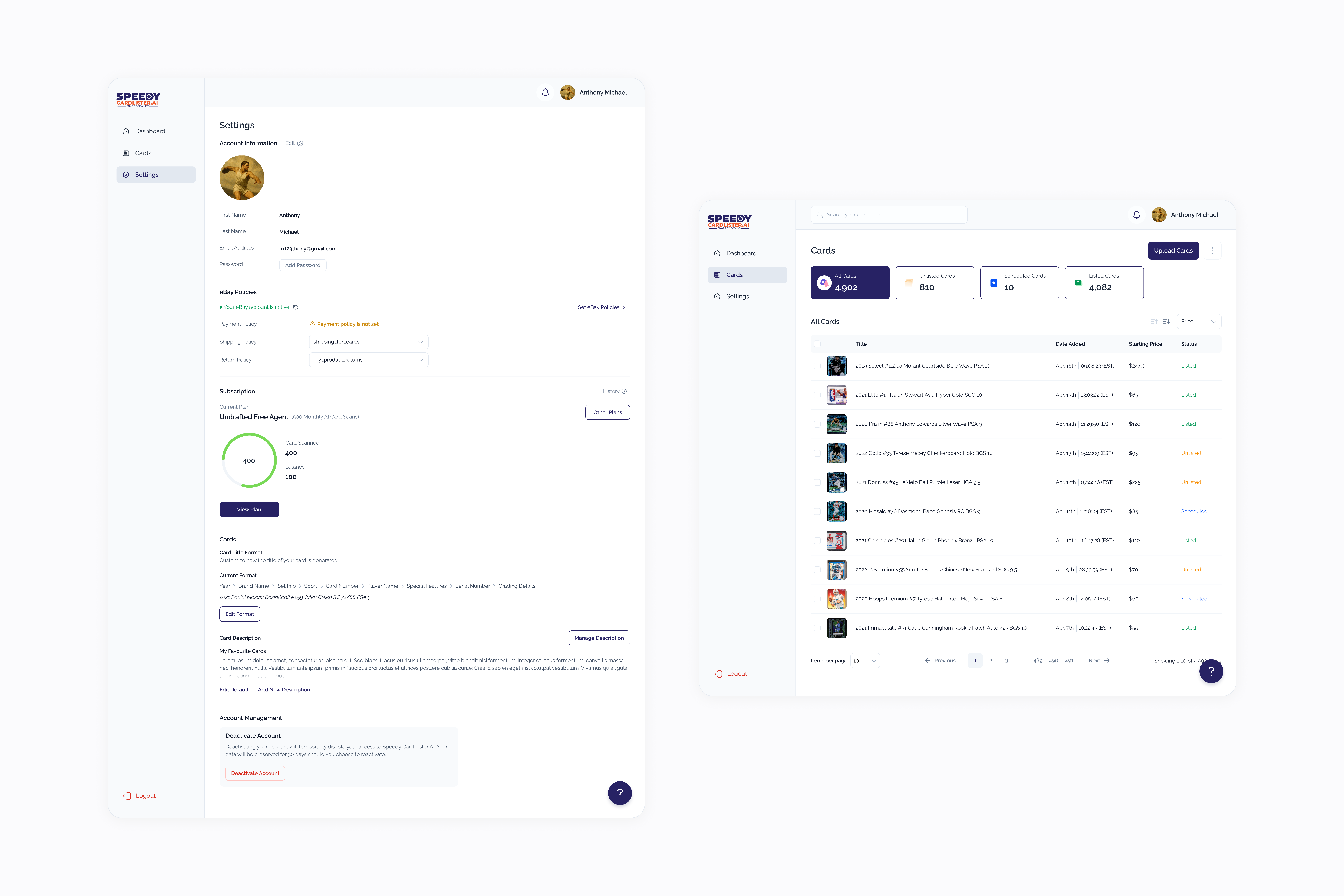
The design challenge was balancing speed with control. Sellers needed to trust the output — which meant seeing exactly what the AI was doing and being able to tweak it instantly. A purely "black box" approach would have killed adoption.
I designed a split-panel interface: card input on the left, live listing preview on the right. Every AI-generated field is editable inline, and sellers can train the tool on their personal selling style over time.
Results that
speak for themselves.
The final product dramatically reduced listing time while improving quality. Users reported more consistent sales performance, attributed directly to the improved listing copy quality. The AI's understanding of card domain language meant outputs felt authentic — buyers trusted the listings, and sellers trusted the tool.
The platform continues to evolve based on seller feedback, with new features like bulk processing, style profiles, and platform-specific tone adjustment in active development.
"I used to spend my whole Sunday writing listings. Now I do it in 20 minutes before breakfast."